(412) 946-8734






Answering FAQ’s with industry expert Jim Passage on the real use and limitations of security window film.
When conversations about building security come up, one topic reliably sparks questions: security window film. Many facility teams have heard of it but still feel left with gaps in understanding or an unclear sense of how it will support their security strategy.
To bring clarity, we sat down with Jim Passage, an industry veteran with 42 years with 3M window films. Over his career, Jim has contributed to some of the most high-profile security film projects in the U.S., including major Manhattan financial institutions and the United Nations headquarters post-9/11.
Today, he advises schools, corporations, and public facilities on practical security enhancements. Paired with U.S. Film Crew’s decades of installation expertise, this conversation offers a grounded, realistic look at what security window film can and cannot do for your facility.
Starting with the basics – what is security window film and why does it exist?
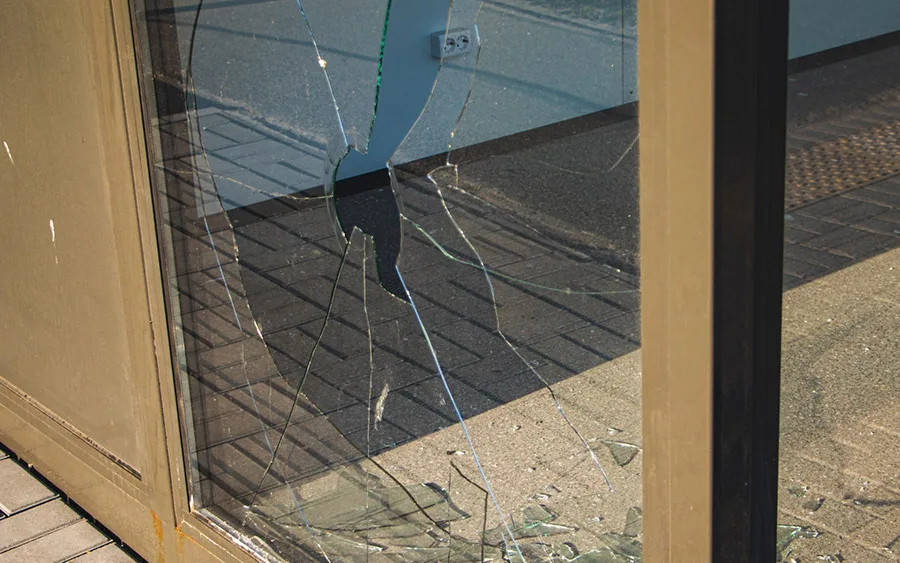
Security window film is a clear or tinted protective layer applied to existing glass to make it stronger and safer. When the glass breaks, from forced entry, impact, accidents, or severe weather, the security film helps hold shards in place.
Jim traces its origins back more than 50 years: “3M has been in the safety and security film business since 1968. The Irish government came to 3M because more people were being killed by flying glass from terrorism than by the blasts themselves. They needed a solution. The glass would still break, but the film held it together.”
Over time, the technology evolved from blast mitigation to forced-entry delay. “We’re putting the same product up today, but for a different reason. We still want to hold the glass in place, but now we’re trying to slow down intruders.”
How does it help protect my people and my facility?
Jim puts it plainly: “Security window film is one thing that can really slow down and buy time to save lives. People say they’re installing cameras or keyless entry, but none of those slow an active shooter. Cameras show you who it is. Keyless entry means nothing if someone shoots out the sidelights. Security window film is the one thing that delays entry.”
Are there any misconceptions or caveats that I should know before adding security window film to my security strategy?
1. It is not bullet-resistant glass.
This is the misunderstanding Jim sees most often:
Jim says: “People ask for bullet-resistant film. We have to be clear from the start: it will not stop a bullet. That’s not what this product is designed to do. If someone wants true ballistic resistance, they need specialized glass.”
Film is designed for delay, not ballistic protection.
2. Not all installations are created equal.
Security performance depends heavily on installation quality and materials, including the attachment system that anchors the filmed glass to the window frame.
When money is on the table, untrained installers often underbid, install with amateur skill and little training, and leave behind unsafe, nonfunctional installs.
Jim also explains the difference in film construction: “With 3M, the Ultra series material you are getting is a patented micro-layer technology that cross-woven to prevent easily ripping through material. It resists tearing and stretching, which is what slows intruders down.”
If it doesn’t stop bullets why include it in my security strategy?
Because stopping bullets isn’t the point. Slowing entry is.
Film is not a replacement for ballistic glass, but it is one of the most cost-effective ways to delay forced entry. Even if a bullet passes through the glass, the attacker still must manually pull the opening apart to enter. That process takes time.
In an active shooter situation, ALICE training cites that “Typically, most incidents conclude within 19 minutes, but the first 10 minutes are often the most deadly.” Taking measures that can add actual time in the case of an incident can be vital.
Jim explains the difference between 3M product types: “Ultra S800 and S80 are both eight mils thick. The difference is Ultra’s micro-layer construction. it’s woven in multiple directions, so it’s much more tear-resistant.”
And regarding 3M’s newest film: “The S2400 is 24-mil thick polyurethane, not polyester. It has four times the tear resistance of S800. It stretches, then pulls back in, making it extremely difficult to pull apart and get through.”
Why does this matter? Because every extra second increases the chances that occupants reach a safe zone and law enforcement arrives.
Thinking practically, security window film typically ranges from $20–$40 per square foot, depending on product and attachment system. Bullet-resistant glazing: $350–$500+ per square foot. When looking at budgets, sometimes security window film makes the most sense for square footage that needs protection.
How do I know it’s being installed the right way?
Quality installation is everything when leveraging security window film.
- Film is almost always installed on the interior (opposite of the attack force, most commonly coming from the outside).
- Attachment systems must be applied correctly to ensure the glass and film remain anchored to the frame. This requires a properly trained team with deep, real-world experience.
- Anti-intrusion standards typically call for 3/8″ frame attachment; bomb blast standards go up to 1/2″.
Poor installation can make a system fail entirely and leave a building with a poor plan and false sense of security.
How long will security window film last?
Warranty coverage varies by manufacturer, so it’s always best to confirm specifics with your installation team. Generally, a properly installed security film should perform consistently throughout its entire warranty period.
Jim speaks to 3M performance and longevity: “With 3M materials , they have been tested and are guaranteed to perform through the whole warranty period, maintain the same performance level from day one to the last day of the warranty. If the film bubbles, peels, cracks, delaminates, or fails to perform, material and labor are covered.”
- Ultra S800: 14-year warranty
- S2400: 10-year warranty
What does a security film project installation look like? How will it impact my people and operations?
Security window film installation is one of the least disruptive security upgrades you can make. Most day-to-day operations continue without interruption.
As Madison, General Manager from U.S. Film Crew, shares:
“Our teams are extremely mindful of our customers’ space. There’s very little equipment involved, which keeps both space usage and noise disruption minimal. And unlike other security retrofits, window film doesn’t require opening up walls, creating gaps in the building, or waiting on long lead times for materials. All of this helps reduce any impact on daily operations. While we can schedule after-hours work, many customers don’t even realize we’re on-site when we install during regular business hours.”
Still have questions?
Send them our way! U.S. Film Crew has decades of experience installing security film for schools, government agencies, facilities, and public buildings. Contact us today to discuss how security window film can enhance your protective measures.